We Remember Emily Malbone Morgan on February 25th
by Jacqueline Schmitt, Companion-in-Charge
Emily Malbone Morgan (1862-1937) | Celebrated February 25 in the Episcopal Church’s liturgical calendar.
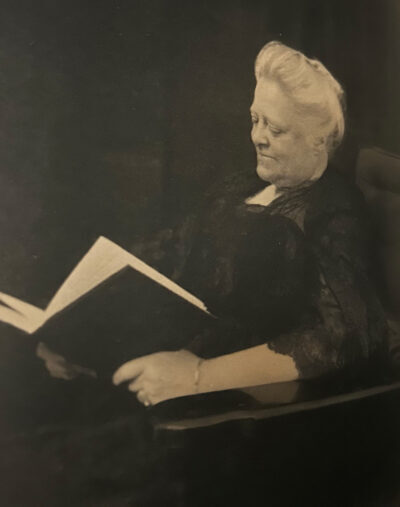
If you read between the lines of letters and papers that some New Englanders wrote after the Civil War, you pick up a sense of dis-ease. The dreadful toll of death and loss haunted many families. Yet during these decades some of those same families came to enjoy the luxuries of the Gilded Age. They exchanged the old rigors of Puritanism for the comforts of the day, but some worried that perhaps they had too much money. Some of them feared, like the rich young man Jesus spoke about, that all this money might prevent them from inheriting eternal life.
Emily Malbone Morgan of Hartford, Connecticut, was one of those worried post-Puritan Protestants. Some young women her age were headed off to college but she was of the social class that did not believe in an academic education for their daughters. Well-to-do young women were readied to take their position in society as wives and mothers.
Think of Edith Wharton, whose main characters chafed at the strictures of class and privilege, whose intelligence and abilities were constricted as tightly as their corset stays. Edith Wharton and Emily Malbone Morgan were exactly the same age – both born in 1862, both died in 1937. Both broke the mold of what young women in their social class were supposed to do.
Two concerns pressed heavily on young Emily. One concern was intercessory prayer. Within Emily’s close circle of friends was a bed-ridden invalid, Adelyn Howard. These young women, in their late teens and early 20s, would gather at Adelyn’s bed to visit and talk, and to pray. As Adelyn grew frail and near death, she urged her friends to stay together, to dedicate themselves to intercessory prayer for the needs of the world. She made them pledge to do this in remembrance of her.
So Emily did. In 1884 she and her friends started the Society of the Companions of the Holy Cross. Within 30 years there were so many Companions that they began to build a summer retreat house—Adelynrood—named for their first dear Companion.
But another concern also nagged at young Emily: her own wealth and privilege. The growing distance between rich and poor. The girls her age who worked six days a week in mills and factories while she and her friends could socialize and travel. She began to open summer vacation homes for factory girls, places where they could rest and eat good food and take in the fresh air of the country. Emily used her own money to open a series of summer homes in Connecticut, and gave them names like “Heart’s Ease” and “Beulahland.”
It was not long before other young women, feeling similar burdens of wealth and privilege, joined her. In particular, a handful of women right out of college—the first generation of American women to graduate college—found Emily and became Companions. And then they got to work and recruited their friends to start the College Settlement Association. They raised their own funds and opened the Rivington Street Settlement House in New York City in 1889, just a few months before Jane Addams and Ellen Gates Starr opened the doors of Hull-House in Chicago.
The settlements provided service to their poor neighbors, yes. But college women and Companions lived in the settlements and supported them with wages they earned. The settlements were laboratories where these young women tried to figure out how to make the world a better place. They applied their brand new educations. They learned to organize. They developed a profound solidarity with working people, labor leaders, immigrants who didn’t speak English, who ate strange food, who were Jews and Catholics and Syrians.
And because they were Companions, they connected Emily Morgan’s two passions: prayer and social concern. They honed a practice of intercessory prayer that tied them in solidarity with the sufferings of the world, with the struggles of the working class, with the cause of peace and reconciliation.
Emily Morgan’s leadership lives on today. Groups of like-minded Companions pray daily for social justice and peace. They try to lead lives of simplicity and service. They find spiritual growth and refreshment in small gatherings and large conferences, in person and online.
We are always inviting women to join us. Come and find out about what has sustained and strengthened us for over 140 years to do the work God calls us to do.